Centre planning
The modular neuro rehab setup: start small, grow in phases
One ceiling rail, a treadmill and ROBO MILL in phase one. Add Robo Walker, then a second rail. How the ReHAX modular gait suite grows with your patient numbers.
Why modular
Most new centres do not know exactly how many patients they will see in year one, two or three. Buying everything at once ties up money in equipment that may sit idle. Buying piecemeal without a plan can leave a room that cannot take the next device.
The modular approach fixes the permanent items in phase one and designs the room for later additions. Each new module attaches to what is already there, so earlier spending is never wasted.
Phase one: the ceiling rail, treadmill and ROBO MILL
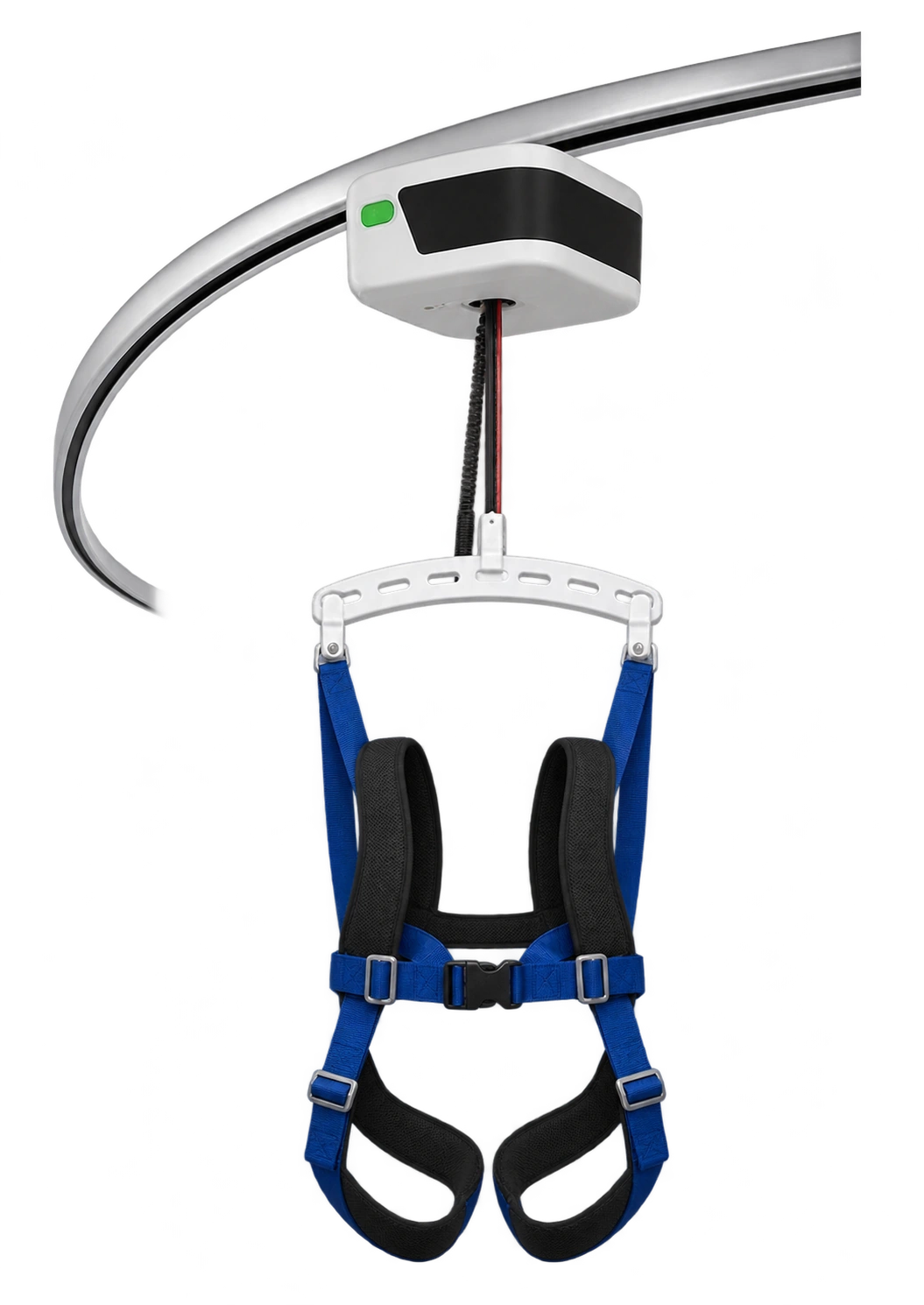
Phase one installs the fixed equipment: a ceiling rail with body-weight support (ZEVYA) along the gait area. A treadmill sits at one end of the rail and ROBO MILL at the other, with a training staircase between them. A patient can move from robotic stepping to treadmill walking to stairs under the same overhead support.
This setup serves a starting patient load, call it X patients per day, with one therapy team. The ceiling rail is the backbone: it protects every patient and every later module uses it.
Phase two: add Robo Walker
When referrals grow, add Robo Walker for overground exoskeleton walking. It works with the existing ceiling rail for extra safety, or on its own once a patient is confident. The same room now runs more patients at once, roughly X + 5 per day depending on session lengths.
No building work is needed, because the rail, power and space were planned in phase one.
Phase three: a second ceiling rail for parallel training
As patient numbers rise further, add a second ceiling rail so two patients can train under overhead support at the same time. Robo Walker can work under either rail. Daily capacity rises again, around X + 10, without a new building.
ReHAX plans the full three-phase layout at the start and shows each phase visually, so owners can see exactly what they are buying now and what they can add later. Ask for a phased layout for your own floor plan.
Before you decide
- Install the ceiling rail and supports in phase one
- Place treadmill and ROBO MILL at opposite ends of the rail
- Reserve space and power for Robo Walker and a second rail
- Review patient numbers before each new phase
- Ask for a three-phase layout drawing
RELEVANT REHAX EQUIPMENT
Products discussed in this article
ZEVYA
Overhead body-weight support for gait, balance and functional mobility, with ceiling-track planning and five model options for adult and paediatric rehabilitation.
Product details →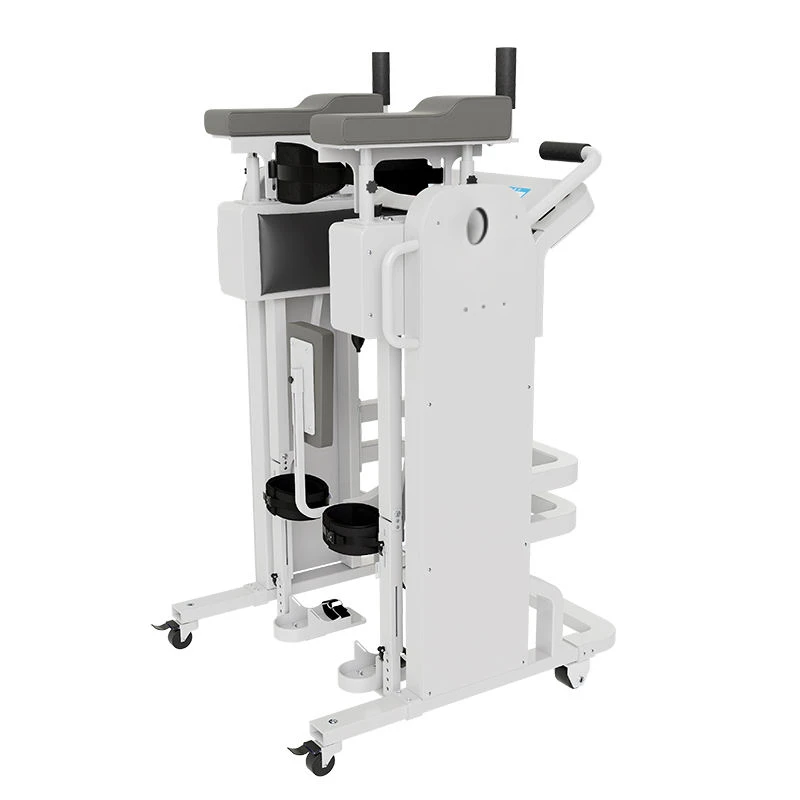
ROBO MILL
A lower-limb exoskeleton system for guided leg movement, repetitive overground walking and targeted left- or right-leg rehabilitation.
Product details →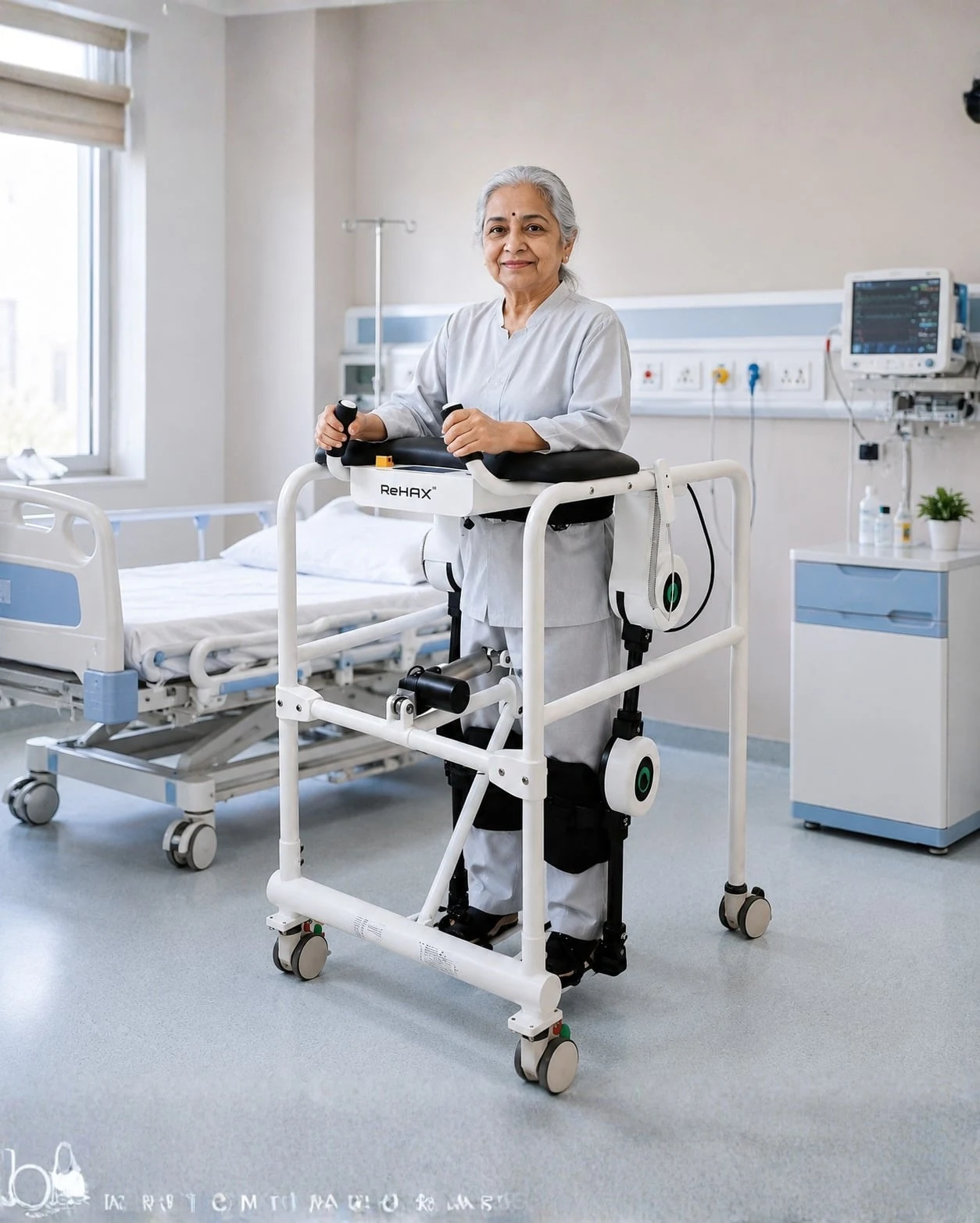
Robo Walker
Powered lower-limb exoskeleton with a walking frame for supervised standing, stepping and overground gait practice.
Product details →Questions & answers
What is a modular neuro rehab setup?
A layout where permanent items such as the ceiling rail are installed first and devices like Robo Walker or a second rail are added in later phases as patient numbers grow.
Can Robo Walker be used with a ceiling rail?
Yes. Robo Walker can be used under a ceiling body-weight support rail for added safety, or on its own once the patient is ready.
How many patients can the setup handle?
It depends on session length and staffing. Each phase adds capacity: phase two adds Robo Walker and phase three adds a second rail so patients can train in parallel. ReHAX can estimate capacity for your schedule.
References
Check the original population, methods and follow-up before applying a finding. These sources do not establish that a ReHAX product was used unless the study identifies it.
- Clinical studyEffects of Robot-Assisted Gait Training with Body Weight Support on Gait and Balance in Stroke Patients ↗
Small stroke sample; consult the original for device and protocol details.
- Randomised trialComparison of Body Weight Support–Assisted Balance and Gait Training With or Without Balance Perturbations in Poststroke Rehabilitation: Multisite Randomized Controlled Trial ↗
Inpatient stroke setting in the United States; compares training methods, not ceiling-system brands.
- Systematic reviewCochrane: Do electronic or robotic gait-training devices help people walk better after a stroke? ↗
Category-level evidence alongside physiotherapy; does not guarantee an individual result or validate a particular brand.