Centre planning
Equipment required to set up a neuro rehabilitation centre
A stroke, brain-injury or spinal neuro centre needs equipment for every stage, from bedside activation to independent walking. Here is the list, stage by stage.
Start with the patient journey, not the catalogue
A neuro rehabilitation centre treats people after stroke, traumatic brain injury, spinal cord injury and progressive conditions such as Parkinson’s disease. Their needs change as they recover: early on they are in bed or a chair, later they stand, then walk with support, then walk on their own. Your equipment list should follow those stages.
Write down which diagnoses you will admit, whether you will run inpatient beds, a day programme or outpatient sessions, and how dependent your patients will be. These answers decide how much of the list below you need on day one and how much can wait.
Stage 1: early activation and bedside work
For patients who cannot yet stand, centres use motor-assisted bedside or seated cycles (such as SUPA and REVA), positioning aids, tilt tables or standing frames and electrical or magnetic stimulation. Peripheral magnetic stimulation (MAG REX) can activate muscles without skin electrodes and is used in spasticity and pain programmes.
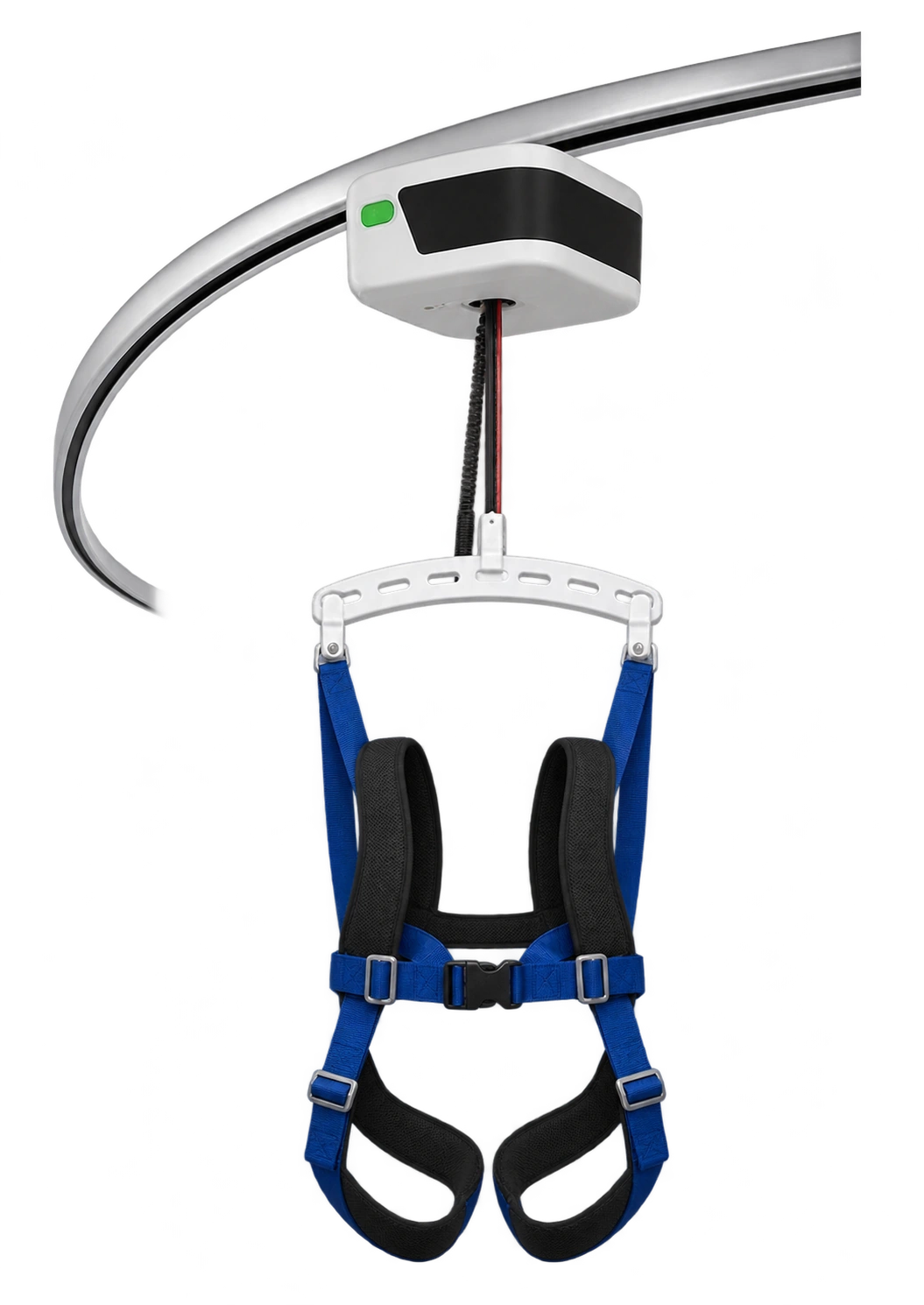
This stage also needs safe transfers. A ceiling track or mobile hoist protects both patient and therapist, and it is far easier to plan the ceiling track before the false ceiling and lighting go in than afterwards.
Stage 2: standing, balance and supported walking
Once patients can bear weight, they need sit-to-stand trainers, parallel bars, a training staircase, balance platforms and overhead body-weight support. A ceiling body-weight support system such as ZEVYA lets therapists practise walking, turning and stairs with a patient who cannot yet be trusted not to fall.
Robotic gait training adds repetition. Robo Walker and ROBO MILL guide the legs through many more steps per session than a therapist can assist by hand. Research on robot-assisted gait training suggests benefit when it is added to physiotherapy, particularly for people who cannot yet walk independently.
Stage 3: independence, endurance and the upper limb
Later stages focus on walking speed, endurance and confidence. Anti-gravity treadmills (LEVA), conventional treadmills with harness support and virtual-reality balance systems (MOVA) keep training challenging as patients improve.
Do not forget the arm and hand. Upper-limb robots and sensor-based training (ERGO, LIFT and VISION) help stroke survivors practise reaching and grasping. Add assessment tools as well, so you can show patients and referring doctors measured progress.
Before you decide
- Define the diagnoses and dependency levels you will admit
- Plan transfers and ceiling tracks before the interior fit-out
- Cover each stage: bedside, standing, supported walking, independent walking
- Include upper-limb therapy and outcome measurement
- Phase specialist robotics to match referrals and trained staff
RELEVANT REHAX EQUIPMENT
Products discussed in this article
ZEVYA
Overhead body-weight support for gait, balance and functional mobility, with ceiling-track planning and five model options for adult and paediatric rehabilitation.
Product details →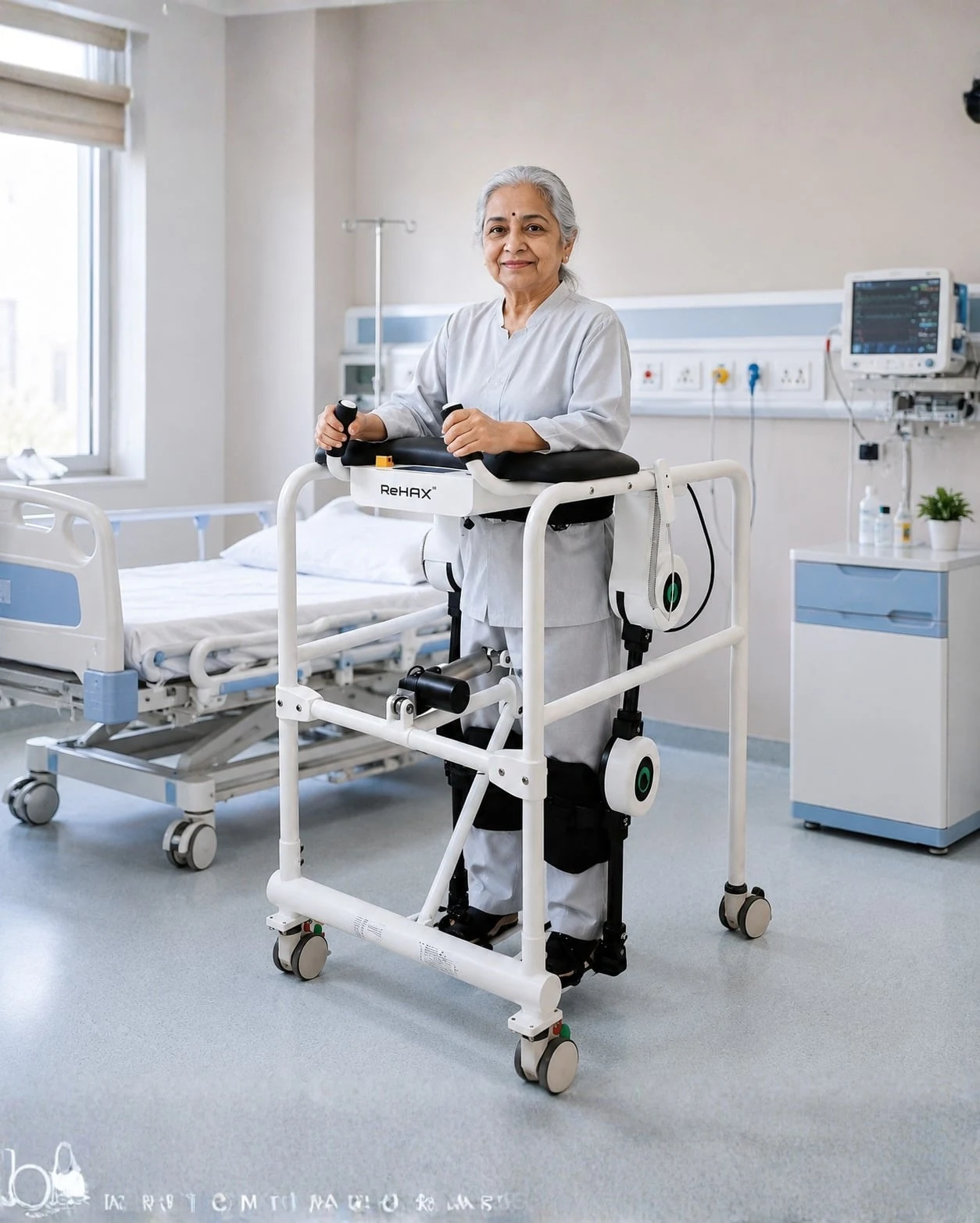
Robo Walker
Powered lower-limb exoskeleton with a walking frame for supervised standing, stepping and overground gait practice.
Product details →
MAG REX
Peripheral magnetic stimulation system. Ask for the model specifications, intended uses and a supervised demonstration.
Product details →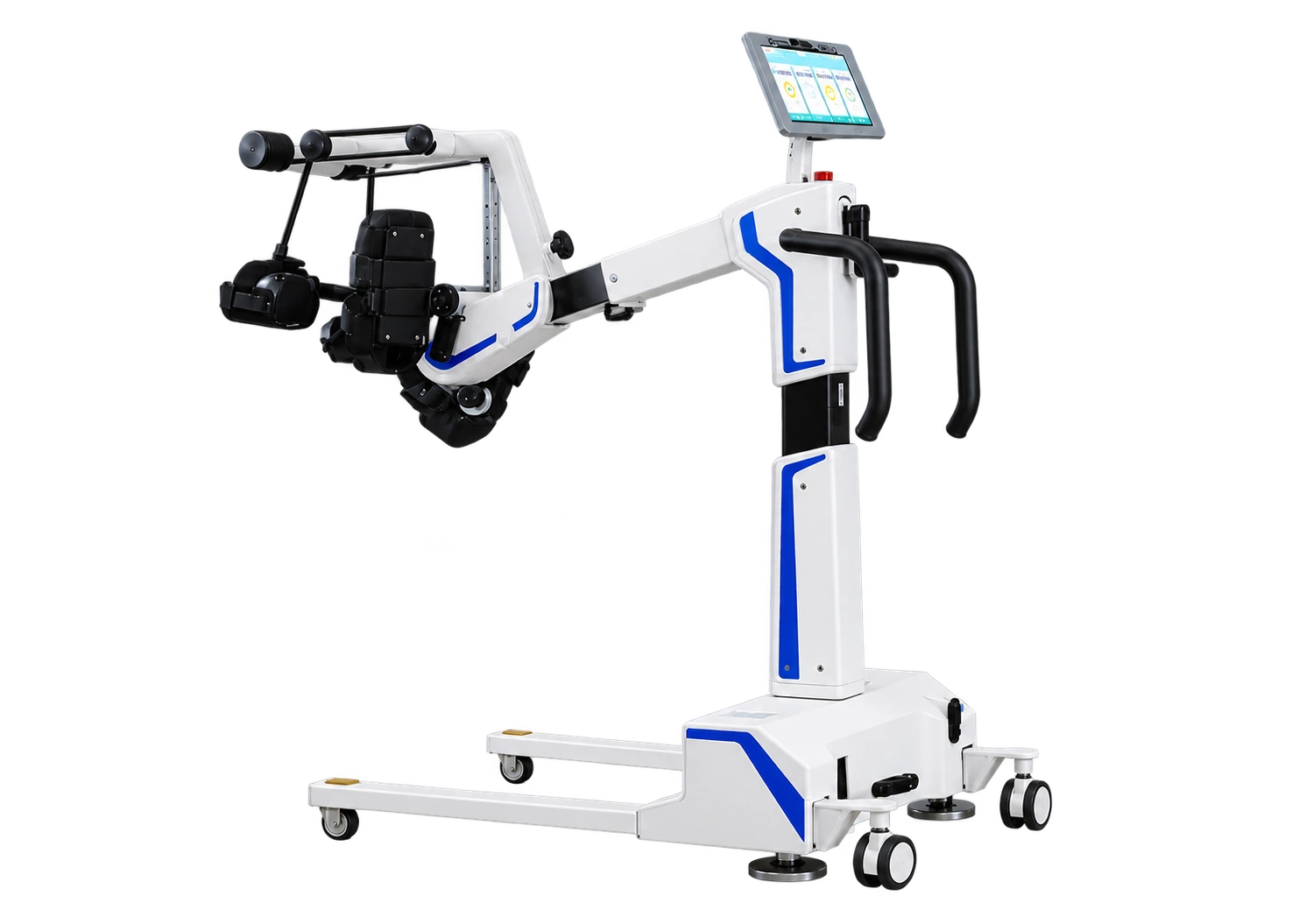
SUPA
Motor-assisted lower-limb cycling for bedside and supine rehabilitation, with an adjustable support arm, adaptive resistance and patient feedback.
Product details →Questions & answers
What equipment is needed for a neuro rehabilitation centre?
A typical list covers bedside cycling and stimulation, transfer and ceiling support systems, standing and balance trainers, robotic or supported gait training, treadmill or anti-gravity training, upper-limb therapy and assessment tools. What you buy first depends on the patients you admit.
Do I need a robotic gait trainer on day one?
Not always. Many centres open with ceiling support, standing and balance equipment and add robotics in a second phase. If you plan to add robotics, design the room and ceiling for it from the start.
Can ReHAX plan the full equipment list?
Yes. ReHAX plans neuro rehabilitation layouts and equipment in phases for hospitals and clinics across India. Call +91 98669 24411 or use the enquiry form.
References
Check the original population, methods and follow-up before applying a finding. These sources do not establish that a ReHAX product was used unless the study identifies it.
- WHO fact sheetWHO fact sheet: Rehabilitation ↗
Global need and health-system context; not India-specific market or revenue data.
- Systematic reviewCochrane: Do electronic or robotic gait-training devices help people walk better after a stroke? ↗
Category-level evidence alongside physiotherapy; does not guarantee an individual result or validate a particular brand.
- Systematic reviewHow robot-assisted gait training affects gait ability, balance and kinematic parameters after stroke: a systematic review and meta-analysis ↗
Pooled devices and protocols; superiority over conventional therapy is not established.
- Systematic reviewEffects of in-bed cycling in critically ill adults: a systematic review and meta-analysis ↗
Findings differ by outcome; does not establish a mortality or muscle-strength benefit or validate SUPA/REVA.