Gait & robotics
Anti-gravity treadmill doubts: gait changes and long-term effects
Will walking at reduced body weight change how a patient walks? Can they readjust to normal gravity? Straight answers to the questions buyers and patients ask.
Does walking at reduced weight change gait?
Yes, while the patient is in the treadmill. Research in healthy adults at 100%, 90% and 75% body weight found changes in stride length, stance time and impact force, especially when jogging and running. At walking speeds the changes were smaller.
A study of competitive runners on a lower body positive pressure treadmill also measured biomechanical changes. These are the intended effect: less load on the joints, so patients can move earlier and with less pain.
Will patients readjust to normal gravity?
The comparison with astronauts returning from space is understandable, but it does not fit. Astronauts spend months without gravity; a patient spends 20 to 30 minutes in a treadmill session and the rest of the day at full body weight.
Good practice is to increase body weight progressively over the programme and to include full-weight walking and strength work. This way the patient’s gait is trained back to normal loading step by step.
What about long-term effects?
Studies report no serious safety problems. A study of people with chronic stroke found the training safe and feasible, with no adverse events and only a small rise in heart rate. A pilot trial after hip and knee replacement reported promising function and balance results.
There is no evidence that sessions harm normal walking in the long term. As with any therapy, longer and larger studies are still needed for each condition.
Practical tips for clinics
Set a clear progression plan, record the body-weight percentage and speed for every session, include full-weight practice before discharge and watch for changes in gait pattern on video.
Explain the plan to the patient. Knowing that support will be reduced step by step answers most worries before they are raised.
Before you decide
- Plan progressive increases in body weight
- Record body-weight percentage and speed each session
- Include full-weight walking and strength work
- Check gait on video during the programme
- Explain the plan to patients
RELEVANT REHAX EQUIPMENT
Products discussed in this article
LEVA · LEVA Pro · Froude
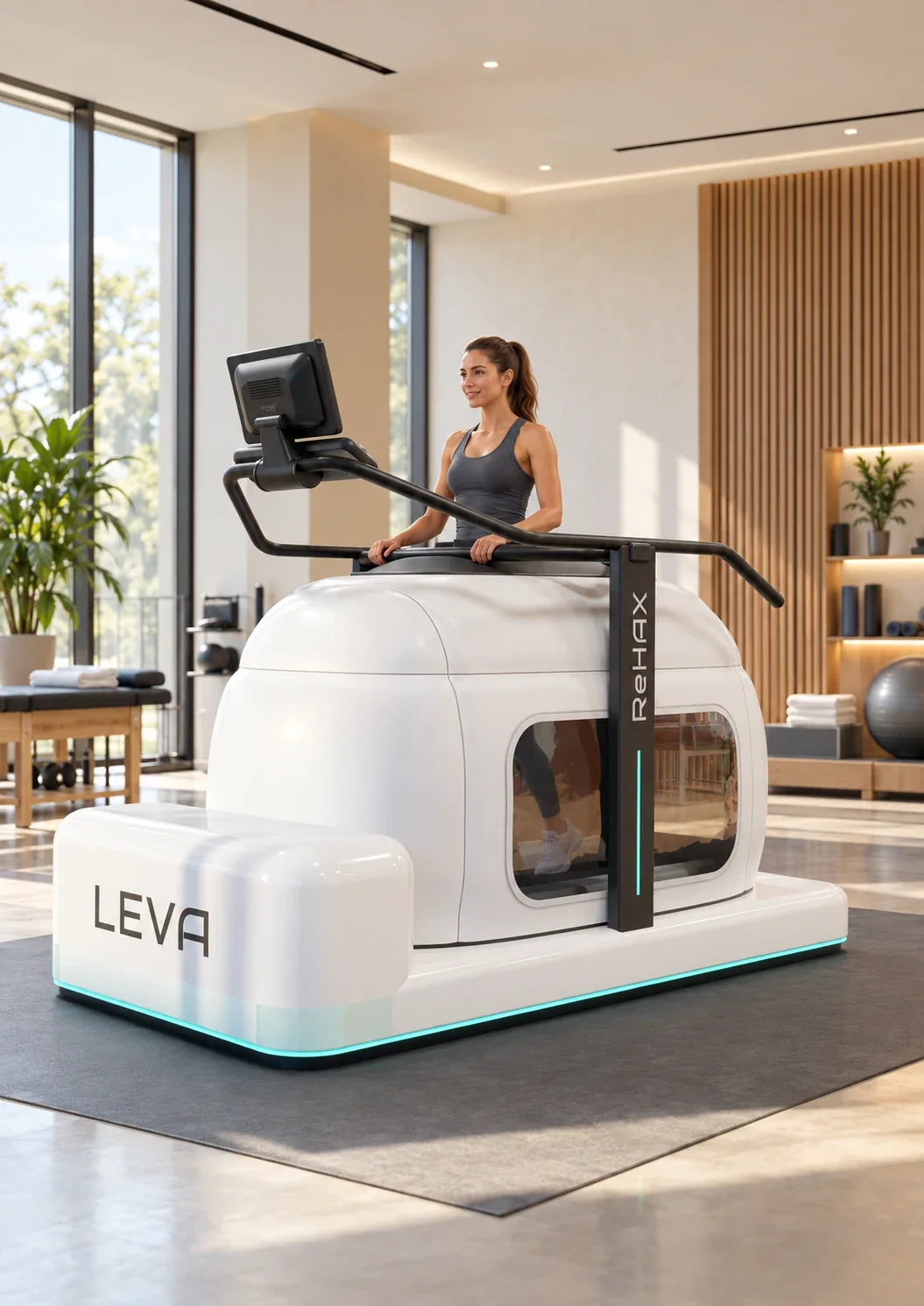
Differential-air-pressure treadmills for supported walking and running. Compare the three models on the LEVA product page.
Product details →Questions & answers
Does an anti-gravity treadmill change the way you walk?
While unloaded, stride and force patterns change, which is the intended effect. Progressive reloading and full-weight practice return the patient to normal loading.
Are there long-term side effects?
Studies report it as safe and feasible, with no evidence of lasting harm to normal walking. A clinician should still screen each patient.
Is it like astronauts returning from space?
No. Astronauts spend months without gravity; patients spend short sessions at reduced weight and the rest of the day at full weight.
References
Check the original population, methods and follow-up before applying a finding. These sources do not establish that a ReHAX product was used unless the study identifies it.
- Original researchForce and Gait Mechanics at Reduced Body Weight on a Lower Body Positive Pressure Treadmill ↗
27 healthy adults at 100%, 90% and 75% body weight; short-term measurements, not patient outcomes.
- Original researchBiomechanical Changes During Running on a Lower Body Positive Pressure Treadmill in Competitive Runners ↗
Competitive runners in a laboratory; findings may not transfer to patients with gait impairment.
- Exploratory studyThe Safety and Feasibility of Lower Body Positive Pressure Treadmill Training in Individuals with Chronic Stroke: An Exploratory Study ↗
Nine participants with chronic stroke, no control group. Shows feasibility, not effectiveness.
- Pilot randomised trialAntigravity Versus Body-Weight-Supported Treadmill Training in Lower-Limb Arthroplasty Rehabilitation: A Randomized Controlled Pilot Trial ↗
Single-centre pilot with attrition; the authors call the findings preliminary.