Gait & robotics
Zero-gravity vs anti-gravity treadmills and non-weight-bearing systems
Zero-gravity, anti-gravity and non-weight-bearing treadmills all reduce load on the legs. How they work, who uses them, and how LEVA compares with AlterG and Boost.
Different names, same idea
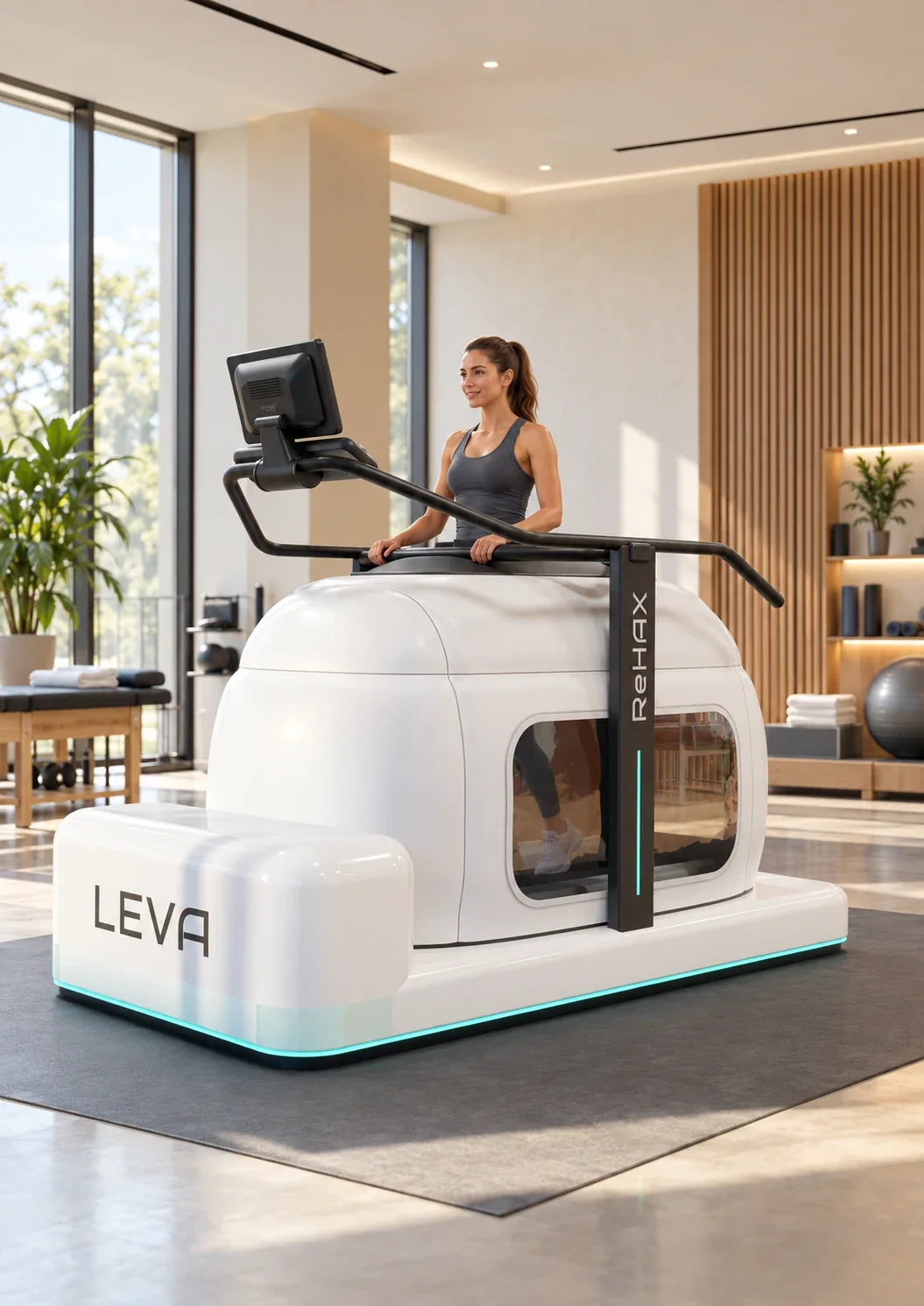
“Zero-gravity treadmill”, “anti-gravity treadmill” and “non-weight-bearing treadmill” usually describe the same technology: a lower body positive pressure (differential air pressure) treadmill. The patient wears sealed shorts that zip into an air chamber; raising the air pressure lifts the body and reduces the weight on the legs.
Body weight can be reduced in small steps, for example to 80%, 50% or less, then increased as healing allows. Harness and ceiling body-weight support systems reduce load in a different way, by lifting from above.
What they are used for
Clinics use these treadmills for walking and running after knee, hip and ankle surgery, for stress fractures and tendon problems, for neurological gait training after stroke or in Parkinson’s disease, for balance training and for weight management in people who find walking painful.
Because the patient is supported evenly and cannot fall, many patients walk with more confidence and a more normal pattern.
Who makes them
Only a few companies make differential-air-pressure treadmills. AlterG in the United States is the best-known name; Boost Treadmills is another US maker. ReHAX LEVA, LEVA Pro and LEVA Froude are differential-air-pressure treadmills supported in India.
Compare unloading range, maximum speed, incline, patient entry, chamber size, calibration and service. Imported units can carry high purchase and service costs in India.
Air pressure or harness?
Air-pressure systems give smooth, even support and are excellent for orthopaedic and sports rehabilitation. Ceiling harness systems such as ZEVYA allow overground walking, turns and stairs, which matters most in neuro rehabilitation.
Many centres use both: the air-pressure treadmill for progressive loading and the ceiling system for functional walking.
Before you decide
- Decide between air-pressure and harness support
- Compare unloading range, speed and incline
- Check patient entry for wheelchair users
- Ask about calibration and service in India
- Plan floor space and power
RELEVANT REHAX EQUIPMENT
Products discussed in this article
LEVA · LEVA Pro · Froude
Differential-air-pressure treadmills for supported walking and running. Compare the three models on the LEVA product page.
Product details →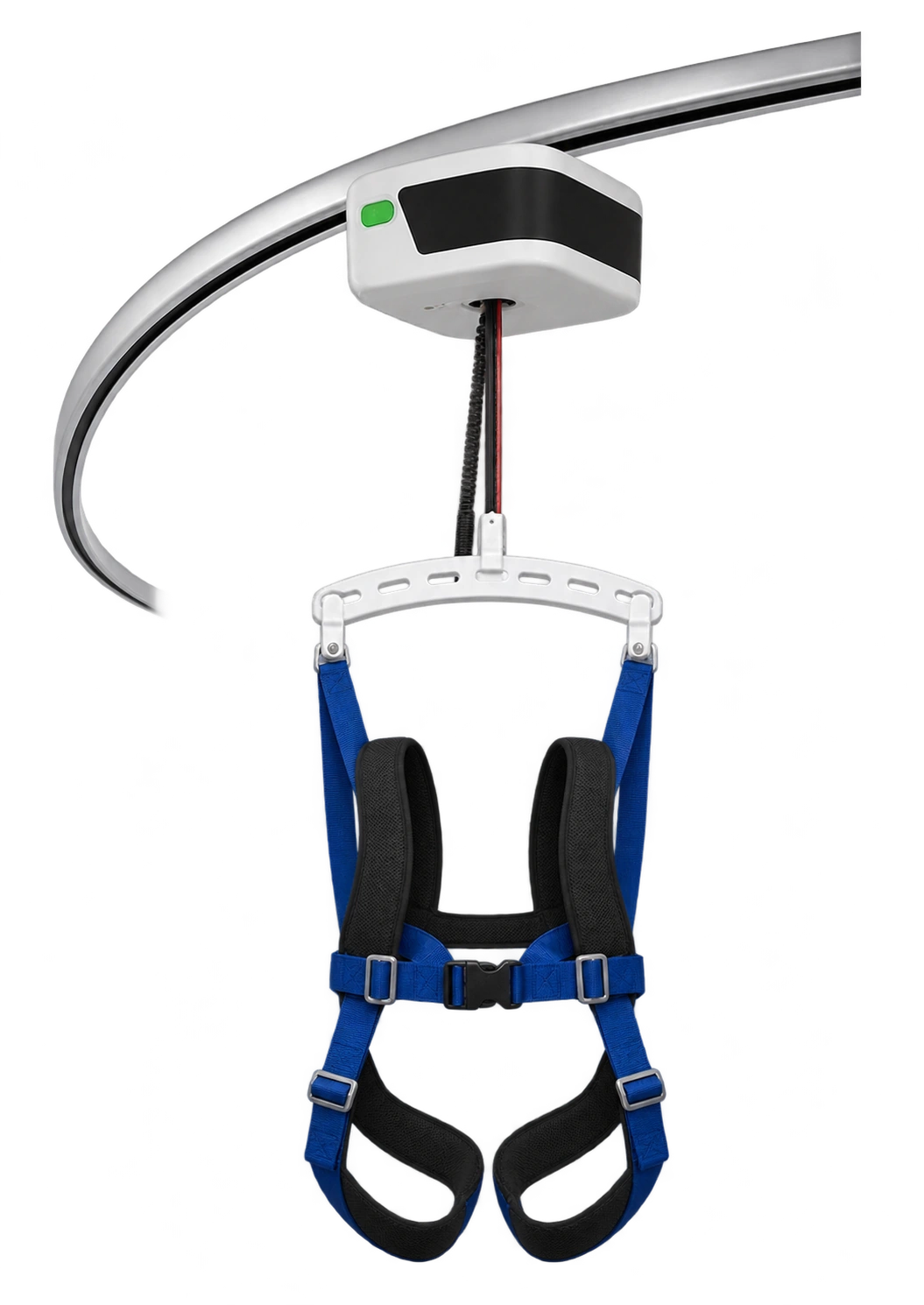
ZEVYA
Overhead body-weight support for gait, balance and functional mobility, with ceiling-track planning and five model options for adult and paediatric rehabilitation.
Product details →Questions & answers
Is a zero-gravity treadmill the same as an anti-gravity treadmill?
Usually yes. Both terms describe lower body positive pressure treadmills that reduce body weight using air pressure.
Is there an affordable alternative to AlterG in India?
Yes. ReHAX LEVA models are differential-air-pressure treadmills with local service. Ask for a demonstration and quote.
References
Check the original population, methods and follow-up before applying a finding. These sources do not establish that a ReHAX product was used unless the study identifies it.
- Randomised studyEffect of Antigravity Treadmill Gait Training on Gait Function and Fall Risk in Stroke Patients ↗
30 participants with stroke; not a trial of LEVA models.
- Pilot randomised trialAntigravity Versus Body-Weight-Supported Treadmill Training in Lower-Limb Arthroplasty Rehabilitation: A Randomized Controlled Pilot Trial ↗
Single-centre pilot with attrition; the authors call the findings preliminary.
- Systematic reviewEffects of body weight support training on balance and walking function in stroke patients: a systematic review and meta-analysis ↗
Includes varied support interventions; does not establish equivalence between air-pressure, harness and robotic systems.