Gait & robotics
Ceiling rail vs hoist vs dynamic body-weight support systems
Ceiling rails, mobile hoists and dynamic body-weight support systems all lift patients, but they do different jobs. Which one your centre needs and why.
Mobile hoists
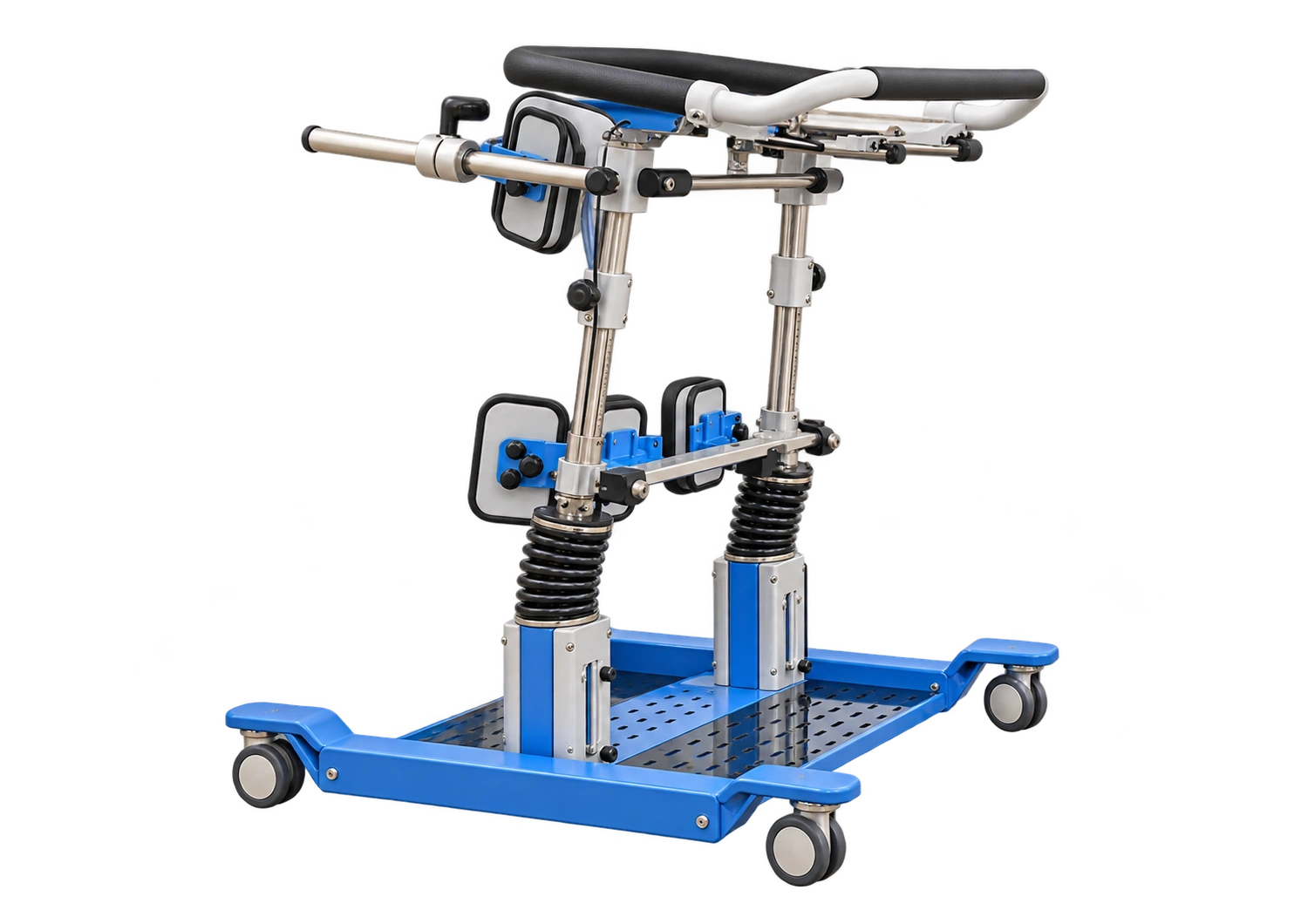
A mobile floor hoist lifts a patient for transfers between bed, chair, toilet and plinth. It is flexible and needs no building work, but it is bulky, needs space to manoeuvre and cannot support walking.
Most centres need at least one mobile hoist for rooms without ceiling tracks.
Ceiling rails for transfers
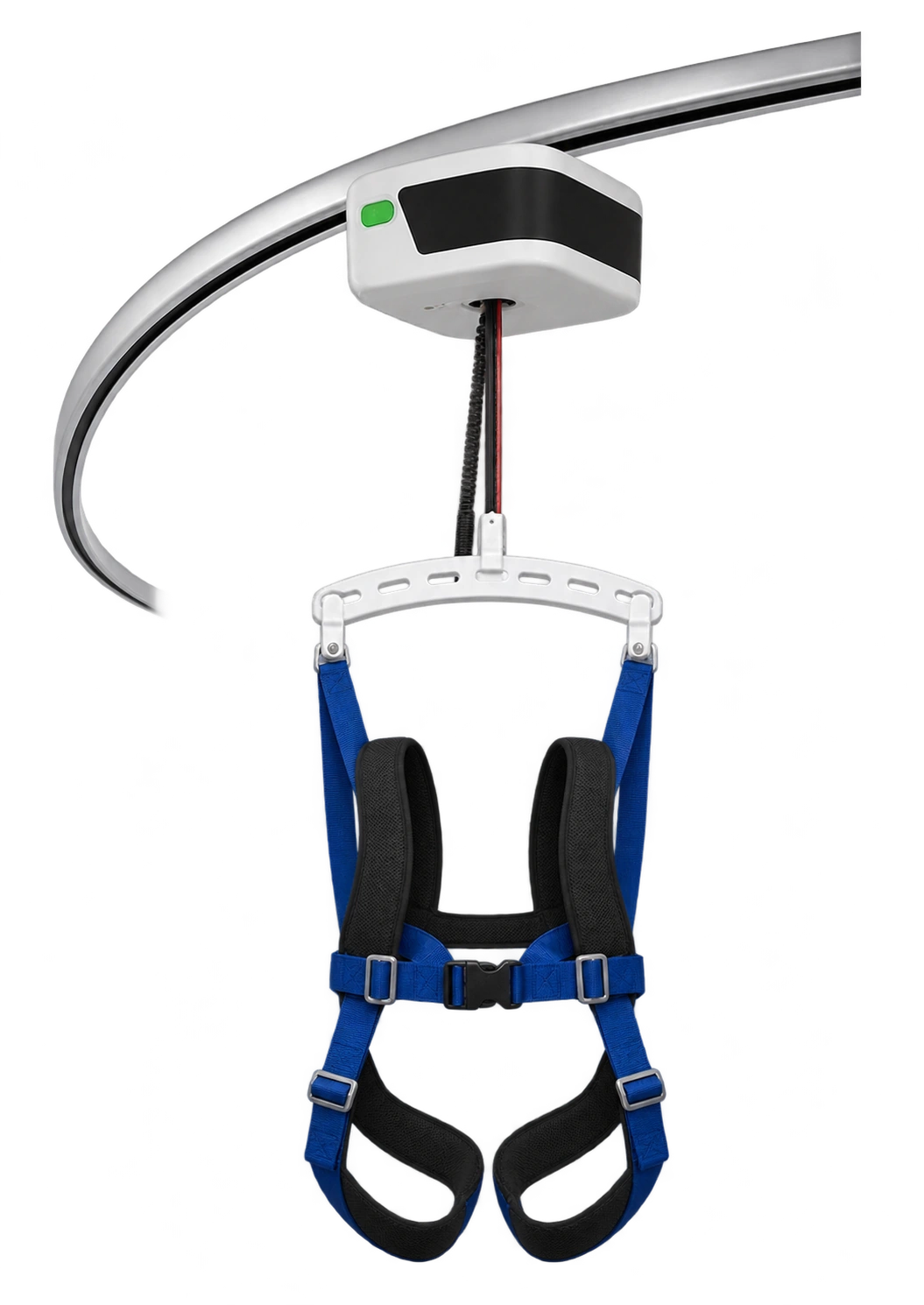
A ceiling rail runs a lifting motor along a track fixed to the ceiling. It takes no floor space, is always in place and reduces manual handling for staff. Tracks can be straight, looped or H-type to cover a whole room.
Plan ceiling rails before the false ceiling and lighting are installed. Retrofitting is possible but costs more.
Dynamic body-weight support
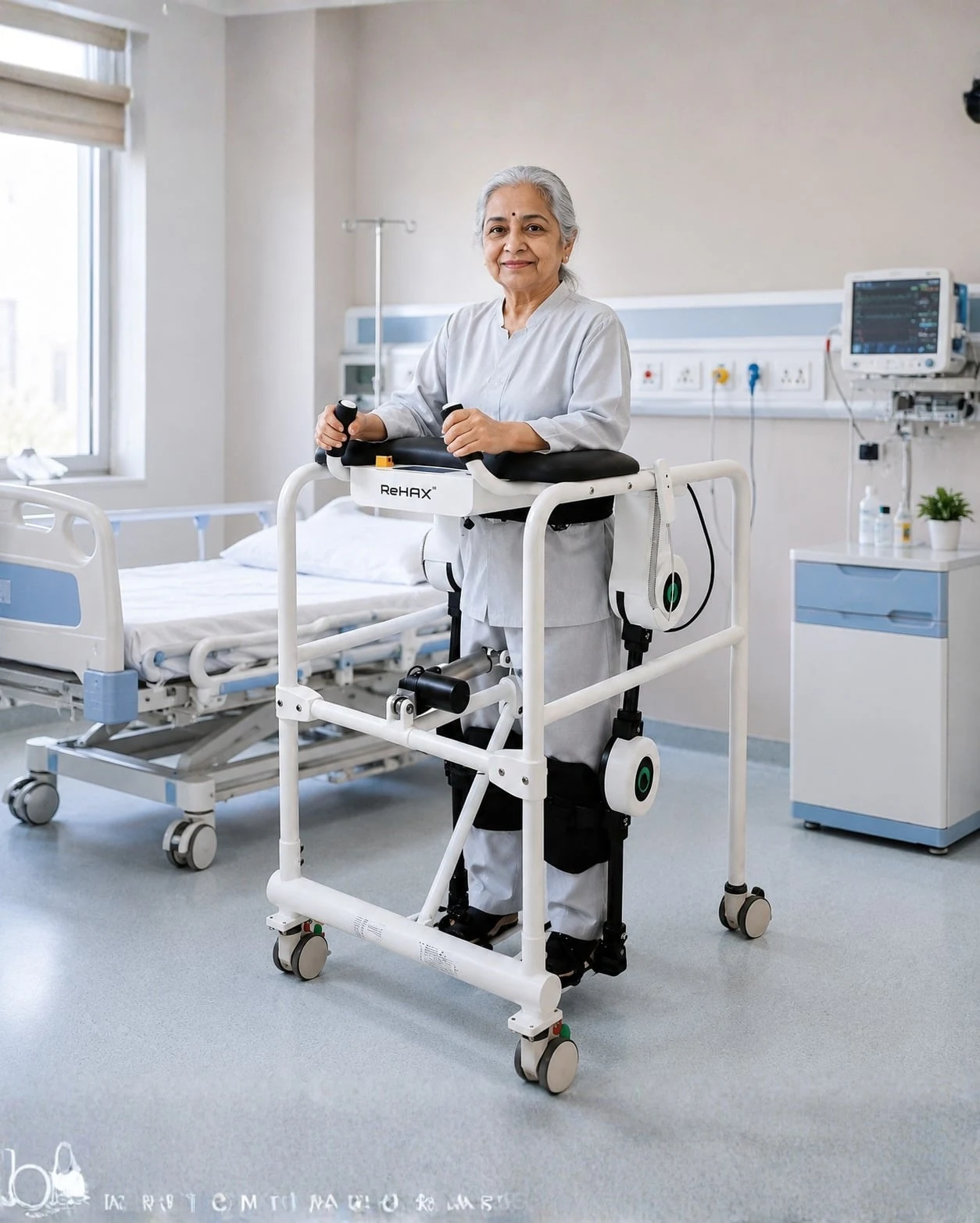
A dynamic body-weight support system goes further. It follows the patient as they walk, holds a set amount of body weight and catches the patient if they fall. Therapists can practise walking, turns, sit-to-stand and stairs safely, even with patients who are very unsteady.
Research on body-weight-supported training after stroke shows benefits for walking and balance, and a recent trial combined body-weight support with balance perturbations in inpatient rehabilitation.
Which do you need?
Wards need transfer rails or hoists. Gait areas need dynamic body-weight support on a ceiling rail. ZEVYA covers both, with static and dynamic options, straight, loop and H-type tracks and models for adults and children.
A single ceiling rail in the gait area also becomes the backbone of a modular setup, carrying treadmill, robotic and overground training in later phases.
Before you decide
- Use hoists or transfer rails in ward areas
- Use dynamic body-weight support in gait areas
- Plan tracks before the false ceiling
- Get a structural check of the ceiling
- Choose track layouts that allow future growth
RELEVANT REHAX EQUIPMENT
Products discussed in this article
ZEVYA
Overhead body-weight support for gait, balance and functional mobility, with ceiling-track planning and five model options for adult and paediatric rehabilitation.
Product details →Questions & answers
What is a dynamic body-weight support system?
An overhead system that follows the patient as they walk, holds a set share of body weight and prevents falls, allowing safe gait, balance and stair practice.
Is a ceiling hoist better than a mobile hoist?
Ceiling hoists save floor space and staff effort and are always ready. Mobile hoists are flexible for rooms without tracks. Most centres use both.
References
Check the original population, methods and follow-up before applying a finding. These sources do not establish that a ReHAX product was used unless the study identifies it.
- Systematic reviewEffects of body weight support training on balance and walking function in stroke patients: a systematic review and meta-analysis ↗
Includes varied support interventions; does not establish equivalence between air-pressure, harness and robotic systems.
- Randomised trialComparison of Body Weight Support–Assisted Balance and Gait Training With or Without Balance Perturbations in Poststroke Rehabilitation: Multisite Randomized Controlled Trial ↗
Inpatient stroke setting in the United States; compares training methods, not ceiling-system brands.
- Original researchMediolateral damping of an overhead body weight support system assists stability during treadmill walking ↗
Research in 21 able-bodied volunteers using the FLOAT system; not evidence of patient outcomes or ZEVYA product validation.