Magnetic stimulation
Can stroke patients use TMS? Effectiveness and safety
Can a stroke patient have transcranial magnetic stimulation? How effective rTMS is for stroke recovery, who it may suit, side effects and safety screening.
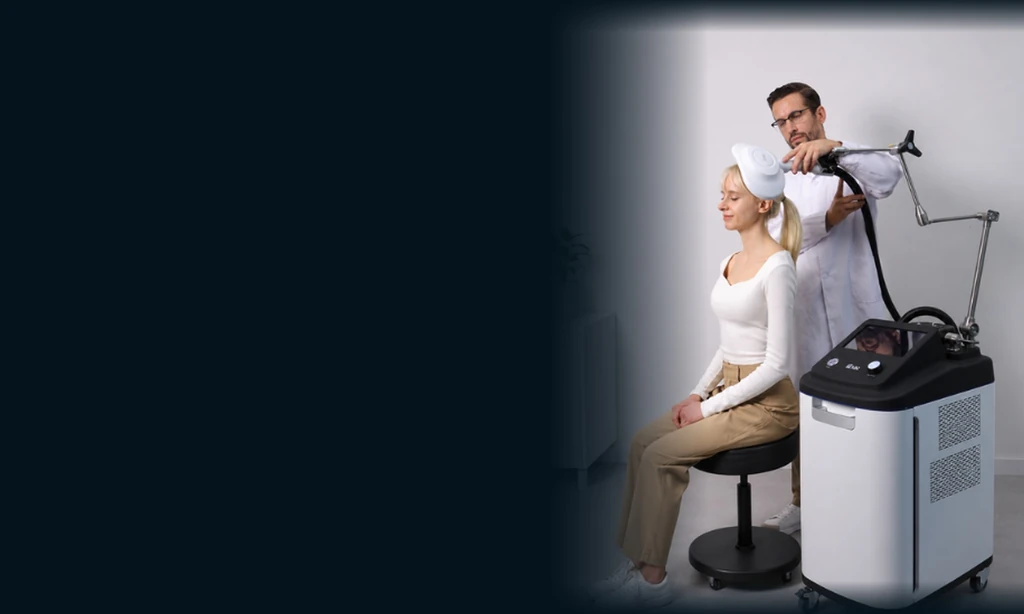
What TMS does after a stroke
Transcranial magnetic stimulation (TMS) uses a coil held over the scalp to create brief magnetic pulses that induce small currents in the brain. Nothing touches the brain and there are no electrodes, needles or anaesthesia, which is why it is often called non-invasive or contactless brain stimulation.
After a stroke, the balance of activity between the two sides of the brain changes. Repetitive TMS (rTMS) protocols aim to increase activity in the affected side, reduce over-activity in the healthy side, or both, to support motor, speech or swallowing recovery alongside therapy.
How effective is it?
European expert guidelines grade the evidence for rTMS by condition and protocol, and some protocols for motor recovery after stroke are among the better supported uses. Reviews also report benefits for aphasia and swallowing in some studies.
Effects vary between patients and studies, and TMS is not a stand-alone treatment. It is used to prime the brain before or during physiotherapy, occupational or speech therapy.
Safety and side effects
International safety guidelines describe rTMS as generally safe when screening and dosing rules are followed. The most common side effects are headache and scalp discomfort. Seizures are rare but possible, so patients are screened.
Typical screening questions cover metal in or near the head, cochlear implants, pacemakers and other implanted devices, a history of epilepsy or seizures, pregnancy and medicines that lower the seizure threshold. A doctor decides whether TMS is appropriate.
Running a TMS service in a stroke centre
A stroke TMS service needs a trained clinician, a written protocol for each indication, a screening form, a method to locate the target area and outcome measures. Sessions are short, so one system can serve many patients a day.
MAG REX-T is the ReHAX transcranial magnetic stimulation system. ReHAX provides installation and training; the clinical team sets the protocols.
Before you decide
- Screen every patient against TMS contraindications
- Use a written protocol for each indication
- Combine sessions with active therapy
- Record outcomes and side effects
- Train the clinical team before starting
RELEVANT REHAX EQUIPMENT
Products discussed in this article
MAG REX-T
Transcranial magnetic stimulation system for specialist services. Review the intended use and training requirements with our team.
Product details →Questions & answers
Can a stroke patient have TMS?
Many can, after medical screening. TMS is used alongside therapy to support motor, speech or swallowing recovery. People with certain implants or seizure risk may not be suitable.
Is TMS painful?
Most people feel tapping on the scalp and may have mild headache or scalp discomfort. It does not need anaesthesia.
Is TMS contactless?
The coil rests on or near the scalp, but no electrodes are attached and no current is applied to the skin. The magnetic field passes through the skull.
References
Check the original population, methods and follow-up before applying a finding. These sources do not establish that a ReHAX product was used unless the study identifies it.
- Expert guidelineEvidence-based guidelines on the therapeutic use of repetitive transcranial magnetic stimulation (rTMS): An update (2014–2018) ↗
Graded evidence by indication and protocol; recommendation levels differ between conditions.
- Expert safety guidanceSafety and recommendations for TMS use in healthy subjects and patient populations: Expert Guidelines ↗
Safety framework; not an individual treatment prescription or proof for every indication.
- Umbrella reviewNon-invasive brain stimulation for stroke-related motor impairment and disability: an umbrella review ↗
Research across methods and protocols; not validation of a particular TMS or tDCS device.
