Gait & robotics
Types of rehabilitation exoskeletons: overground, treadmill, EMG and EEG
Overground or treadmill-based? Triggered by sensors, muscle signals (EMG) or brain signals (EEG)? A plain guide to the types of rehab exoskeleton and who each suits.
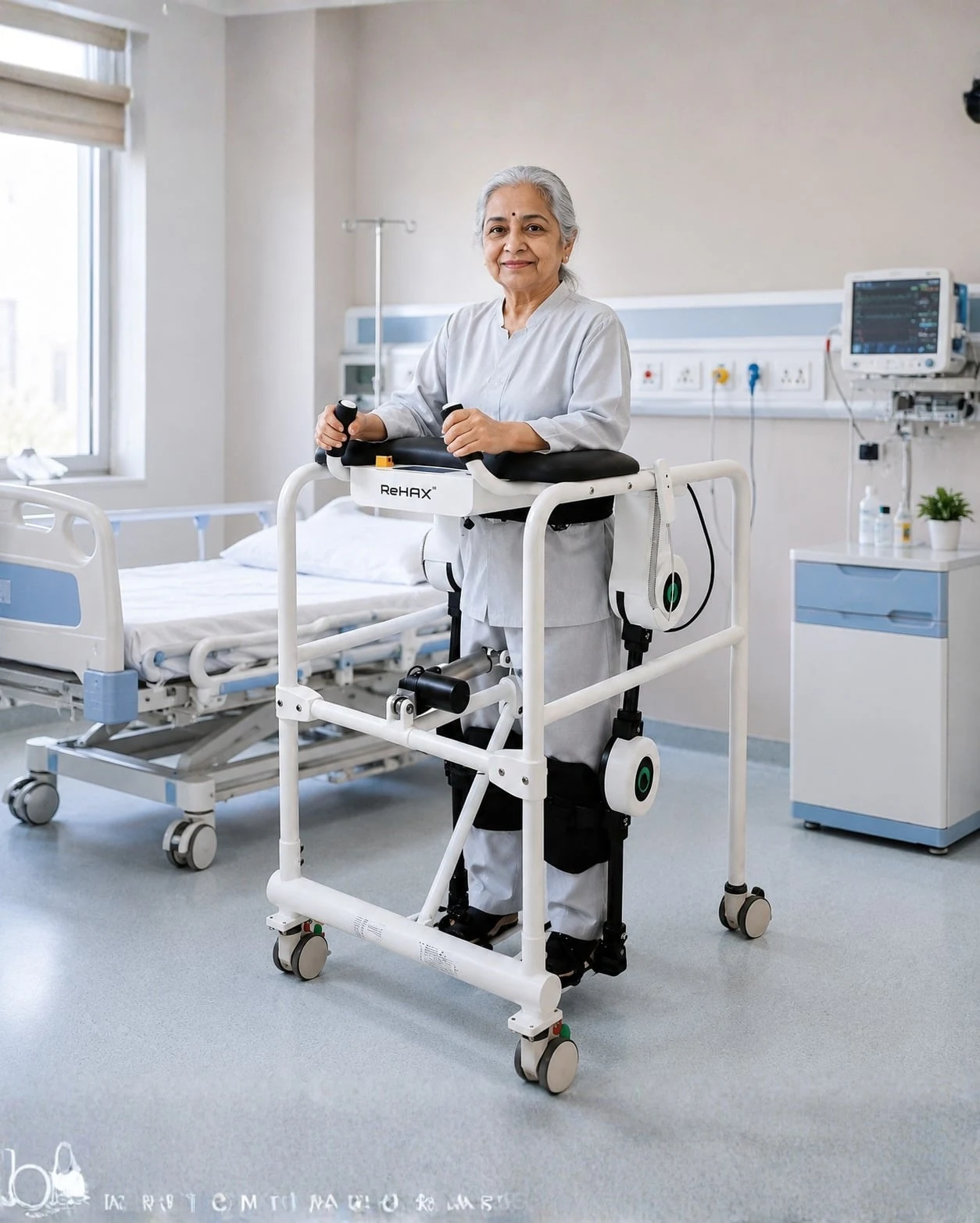
Overground exoskeletons
An overground exoskeleton is worn on the legs and lets the patient walk across the floor, usually with a frame, crutches or a therapist alongside. Because the patient moves through real space, overground training is close to everyday walking: starting, stopping, turning and walking towards a goal.
Robo Walker is an overground exoskeleton with a walking frame for supervised standing, stepping and gait practice. Overground devices suit stroke and spinal cord injury patients who can be fitted safely and whose goal is functional walking.
Treadmill-based robotic gait trainers
Treadmill-based systems combine a robotic leg orthosis, body-weight support and a treadmill. The patient walks in place while the robot guides the legs. These systems allow very high step counts and suit patients who are too weak or unsteady for overground walking.
Many well-known gait robots are treadmill-based. They usually take more floor space and a larger investment than overground devices, and they train walking in a straight line at a set pace.
How the robot knows when to move: sensors, EMG and EEG
Most exoskeletons are triggered by motion and pressure sensors: when the patient shifts weight, the next step begins. EMG-based systems read electrical signals from the leg muscles, so the step can follow the patient’s own effort. Research shows EMG can also be used to see how muscles work during robot-assisted walking.
EEG-based systems read brain signals through a cap on the scalp, linking the intention to move with the movement itself. A 2026 proof-of-concept study found that combining EEG and EMG improved how quickly and accurately an exoskeleton detected intended steps. These systems remain largely in research and specialist centres.
Which type should a centre buy?
For most Indian centres, an overground exoskeleton plus ceiling body-weight support covers the widest range of patients at a manageable cost. A treadmill-based station or a robotic gait trainer such as ROBO MILL adds high-repetition training for weaker patients.
EMG and EEG features are valuable for research and for patients with very little voluntary movement, but ask for evidence and training support before paying extra for them.
Before you decide
- Decide between overground walking and treadmill repetition
- Check fitting limits: height, weight, joint range
- Ask how steps are triggered and adjusted
- Ask for evidence behind EMG or EEG features
- Plan ceiling support for safety
RELEVANT REHAX EQUIPMENT
Products discussed in this article
Robo Walker
Powered lower-limb exoskeleton with a walking frame for supervised standing, stepping and overground gait practice.
Product details →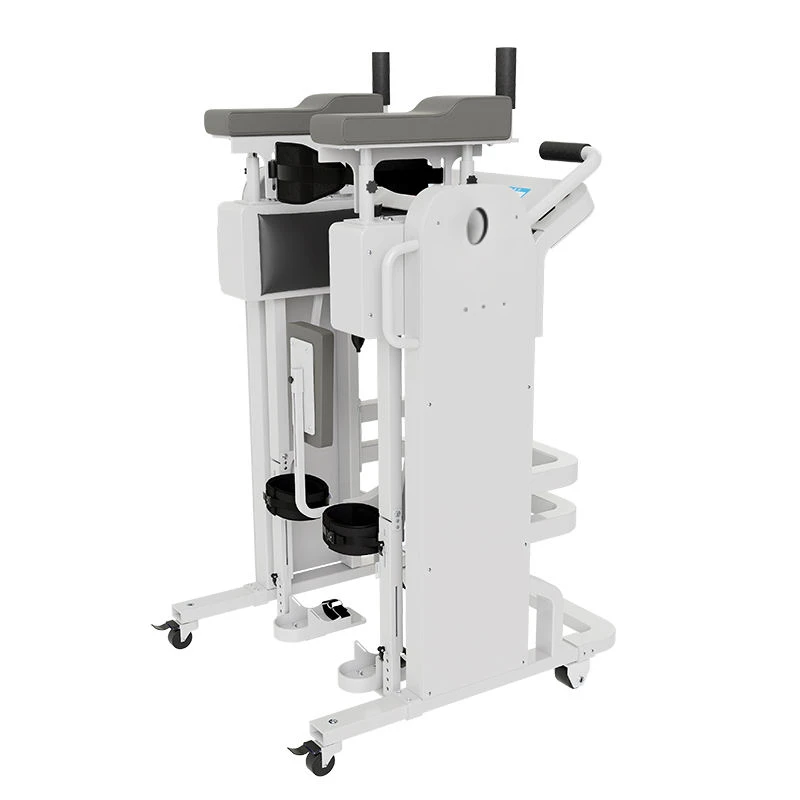
ROBO MILL
A lower-limb exoskeleton system for guided leg movement, repetitive overground walking and targeted left- or right-leg rehabilitation.
Product details →Questions & answers
What is an EMG-based exoskeleton?
An exoskeleton that reads electrical signals from the patient’s muscles to time or assist each movement, so the device responds to the patient’s own effort.
Is an overground or treadmill exoskeleton better?
Neither is better for everyone. Overground devices train real-world walking; treadmill systems give high repetition for weaker patients. Many centres use both.
References
Check the original population, methods and follow-up before applying a finding. These sources do not establish that a ReHAX product was used unless the study identifies it.
- Proof-of-concept studyHybrid EEG–EMG intention decoding for real-time triggering of a lower-limb exoskeleton ↗
Seven naive participants after training on healthy volunteers; not clinical outcome evidence.
- Original researchRobotic Exoskeleton Gait Training in Stroke: An Electromyography-Based Evaluation ↗
Small sample using one exoskeleton; muscle-activity findings, not long-term walking outcomes.
- Systematic reviewCochrane: Do electronic or robotic gait-training devices help people walk better after a stroke? ↗
Category-level evidence alongside physiotherapy; does not guarantee an individual result or validate a particular brand.