Pain & recovery
Heat vs cold therapy: uses, precautions and equipment
Heat and cold may provide temporary symptom relief in different circumstances. Skin condition, sensation and circulation affect whether either is suitable.
Understand the treatment aim
NHS patient guidance describes cold for symptoms such as heat and swelling, and heat for comfort and muscle relaxation in selected situations. The choice depends on the injury and stage of care.
Neither a feeling of warmth nor reduced soreness establishes faster tissue healing. A clinician should relate symptom management to the activity and rehabilitation plan.
Check skin, sensation and circulation
Hot and cold applications can injure skin. Reduced sensation can prevent someone noticing excessive temperature, and circulation problems require particular care.
Use the treating team’s advice and the instructions for the actual pack or device. Postoperative dressings, wounds and individual medical conditions may change what is suitable. This guide does not prescribe a universal temperature or duration.
Compare the equipment for the task
A heat pack, cold pack, circulating system and cold-compression unit involve different preparation and monitoring. Review cleaning, fitting, temperature control where provided and patient education.
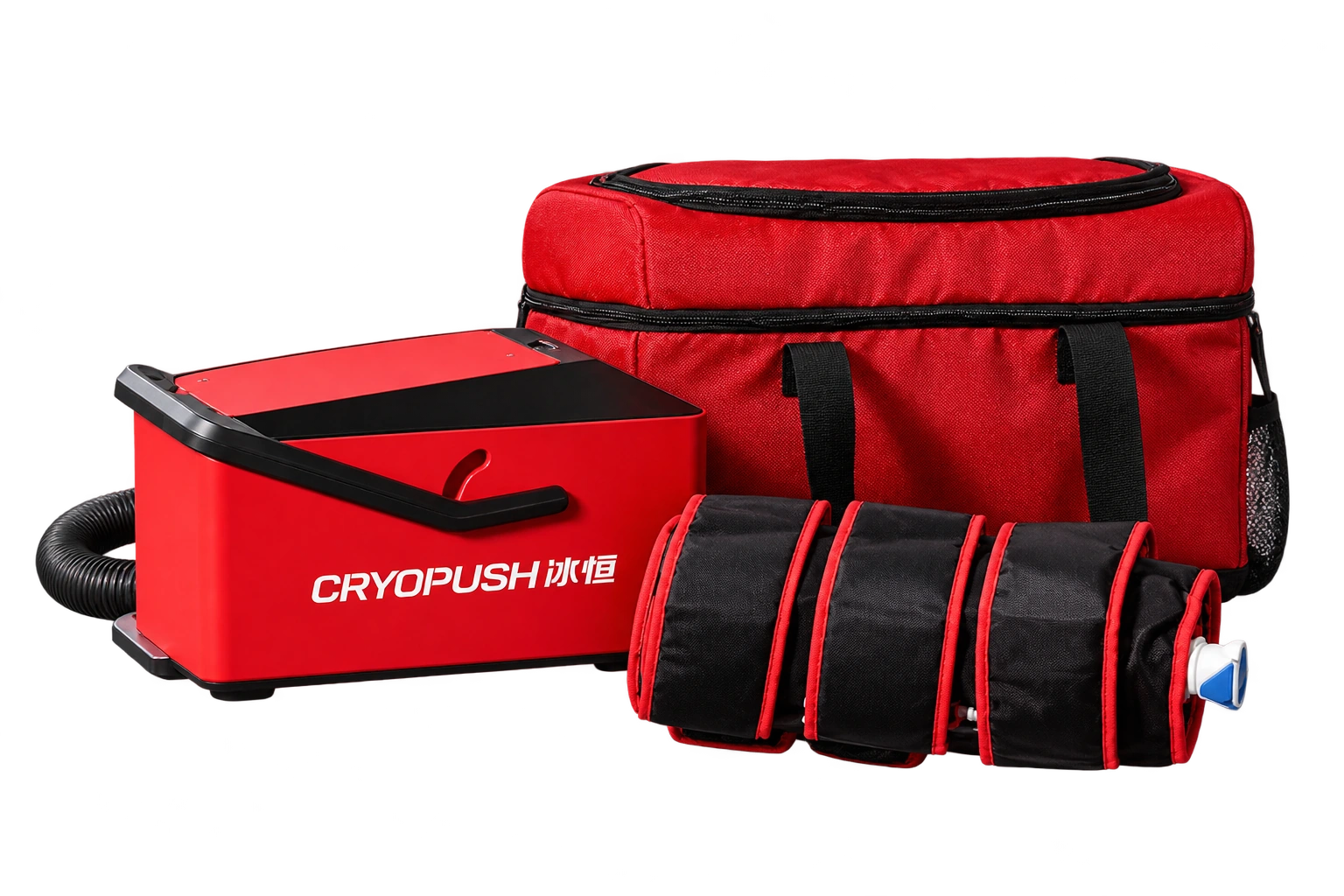
CRYOPUSH is relevant to a local cold-therapy enquiry. Confirm the quoted model’s functions; do not assume it also supplies heat. Ask separately about heat-therapy equipment and availability.
RELEVANT REHAX EQUIPMENT
Products discussed in this article
CRYOPUSH
Portable cold therapy and intermittent pneumatic compression system for clinic, sideline and home recovery programmes.
Product details →References
Check the original population, methods and follow-up before applying a finding. These sources do not establish that a ReHAX product was used unless the study identifies it.
- Patient informationSherwood Forest Hospitals NHS: Heat and ice ↗
General guidance; follow the treating team and device instructions for a particular patient.